SHINE 2026 Conference Presentations
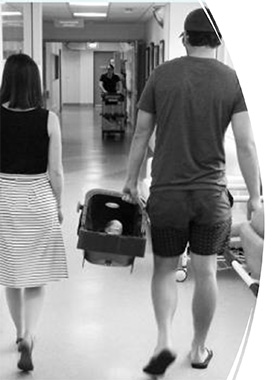
Transitioning From NICU to Home: Understanding & Supporting Home Sweet Home
When a high-risk infant leaves the NICU, the work is far from over.
In this January 2026 lecture, Dr. Elisabeth C. McGowan — Associate Professor of Pediatrics at Brown University and Medical Director of the WIH NICU Follow Up Program — explores how the home environment shapes neurodevelopmental outcomes just as powerfully as medical diagnoses, and what programs like the WIH Transition Home Program are doing about it.
Drawing on decades of research and real-world data, Dr. McGowan examines the complex interplay of biological vulnerability, socioeconomic stress, maternal mental health, neighborhood risk, and family engagement — and outlines practical, evidence-based strategies for supporting families from NICU discharge through early childhood.
Practically Highly Reliable: Are We There Yet?
In this January 2026 lecture, Dr. Shannon Connor Phillips — former Chief Quality, Safety and Experience Officer at Intermountain Health — makes the case that achieving high reliability in healthcare is less about perfection and more about building a culture that is always learning, always caring, and always honest about the gap between expectations and reality.
Drawing on the five principles of High Reliability Organizations — preoccupation with failure, reluctance to simplify, sensitivity to operations, deference to expertise, and commitment to resilience — Dr. Phillips argues that true safety and quality can only be achieved when psychological safety, just culture, and person-centered care are treated not as aspirational values, but as operational commitments practiced at every level of the organization every single day.
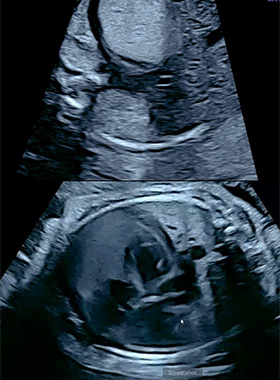
The Evolving Paradigm of Prenatal Therapy for Cystic Fibrosis
Cystic fibrosis affects roughly 800 newborns in the United States each year, but advances in CFTR modulator therapy — particularly the triple-drug regimen elexacaftor/tezacaftor/ivacaftor (ETI/Trikafta) — have fundamentally transformed how we think about this disease, even before birth. In this presentation, Dr. Zaretsky explores the emerging frontier of prenatal CF therapy, examining how CFTR modulators administered to pregnant carriers can cross the placenta and potentially prevent or reverse meconium ileus, preserve pancreatic function, and reduce the need for neonatal surgery.
Drawing on published case reports, Colorado Fetal Care Center cases, and data from the French MODUL-CF registry, he outlines what the current evidence shows, where critical knowledge gaps remain, and how the upcoming PROTECT prospective observational study aims to build the evidence base needed to make prenatal CF therapy a standard of care.

Practical Applications of AI in Healthcare
Artificial intelligence is rapidly moving from research concept to clinical reality, and few are better positioned to explain the transition than Dr. Samer Albahra of Cleveland Clinic. In this presentation, Dr. Albahra surveys the practical landscape of AI in healthcare — from the fundamentals of how large language models are trained to the hands-on engineering decisions that determine whether a deployment succeeds or fails.
Drawing on five real-world projects implemented at Cleveland Clinic, he illustrates how LLMs can extract structured data from narrative reports, automate time-consuming grossing workflows, power searchable pathology databases, and map residency curricula — with rigorous evaluation metrics to back up each use case. Whether you’re a clinician curious about where AI fits in your workflow or a data scientist weighing build-versus-buy tradeoffs, this talk offers a grounded, institution-tested perspective on what it actually takes to put these tools into practice.
Changing the Culture of Care
Every year, roughly one in ten babies is born preterm — and yet in most NICUs, parents have historically been bystanders rather than partners in their baby’s care. Dr. Karen Benzies of the University of Calgary makes the case that changing this isn’t just the right thing to do for families; it’s also a measurable health system imperative. In this presentation, she traces the full arc of Alberta Family Integrated Care (FICare) — from its co-design with frontline providers through a provincial cluster randomized controlled trial, to sustained implementation across all 14 of Alberta’s NICUs.
The evidence is compelling: infants go home sooner, parents are less distressed and more confident, and the health system has avoided millions of dollars in NICU costs — without any increase in readmissions. But Dr. Benzies goes beyond the outcomes data to address the harder question of how you actually change an institution’s culture, walking through the strategic inflection points, governance structures, and iterative implementation cycles that made FICare stick.
Exosomes, artificial intelligence, and beyond
In this wide-ranging lecture from University of Florida neonatologist Dr. Michael Weiss, the emerging frontiers of hypoxic-ischemic encephalopathy (HIE) management come into sharp focus — from the promise of exosome-based biomarkers to the power of machine learning applied to fetal heart rate tracings and bedside monitoring data.
Drawing on recent clinical research, Dr. Weiss makes the case for a more precise, data-driven approach to identifying injury severity, predicting neurodevelopmental outcomes, and ultimately tailoring neuroprotective interventions to individual newborns at the earliest possible moment.
The effect of the NICU environment on parents’ participation – A focus on the father’s role
When a premature infant enters the NICU, the focus naturally falls on medical survival—but what about the father standing just outside the incubator? In this presentation from the 2026 SHINE Conference, Dr. Liisa Lehtonen of Turku University Hospital draws on over a decade of research to show how both the psychological culture of a NICU and its physical design directly shape how much fathers—and parents overall—are able to participate in their infant’s care.
From hormonal changes that prepare men for fatherhood to measurable data showing that single-family room architecture nearly doubled fathers’ daily presence, Lehtonen makes a compelling, evidence-based case that family-centered care isn’t a nice-to-have—it’s a clinical intervention with lasting effects on infant outcomes and parental mental health.
Has Quality Improvement Improved Outcomes in Neonatology
In neonatology, research has generated transformative advances — but knowing what works and actually implementing it consistently are two very different challenges. This presentation by Dr. Munish Gupta of Beth Israel Deaconess Medical Center and Harvard Medical School examines the role of quality improvement (QI) in bridging that gap, drawing on data from large networks like the Vermont-Oxford Network to show meaningful gains in outcomes ranging from bloodstream infections to intraventricular hemorrhage.
But it doesn’t stop at the wins: Gupta also takes an honest look at where QI falls short, why observational QI findings don’t always hold up under rigorous trial conditions, and how the field can do better — making the case that research and QI are most powerful not as rivals, but as partners.
The Neuroscience of Nurture – Impacts on Brain & Language Development
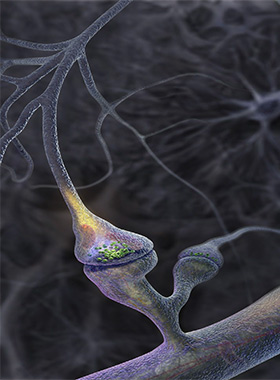
Presented by neonatologist Dr. Raylene Phillips of Loma Linda University Children’s Hospital, this slide-based lecture explores the neuroscience behind why love, touch, and close physical contact aren’t just comforting for newborns — they’re biologically essential.
Drawing on research spanning fetal brain development, attachment theory, skin-to-skin care, and language acquisition, Dr. Phillips makes the case that the infant brain is literally shaped by early caregiving experiences, and that nurturing interactions — from a mother’s heartbeat to a parent’s voice in the NICU — create the synaptic connections that underpin lifelong cognitive and emotional health.
Join Us for 3 Eventful Days of Innovations in Healthcare
Please provide your contact information to receive conference updates.